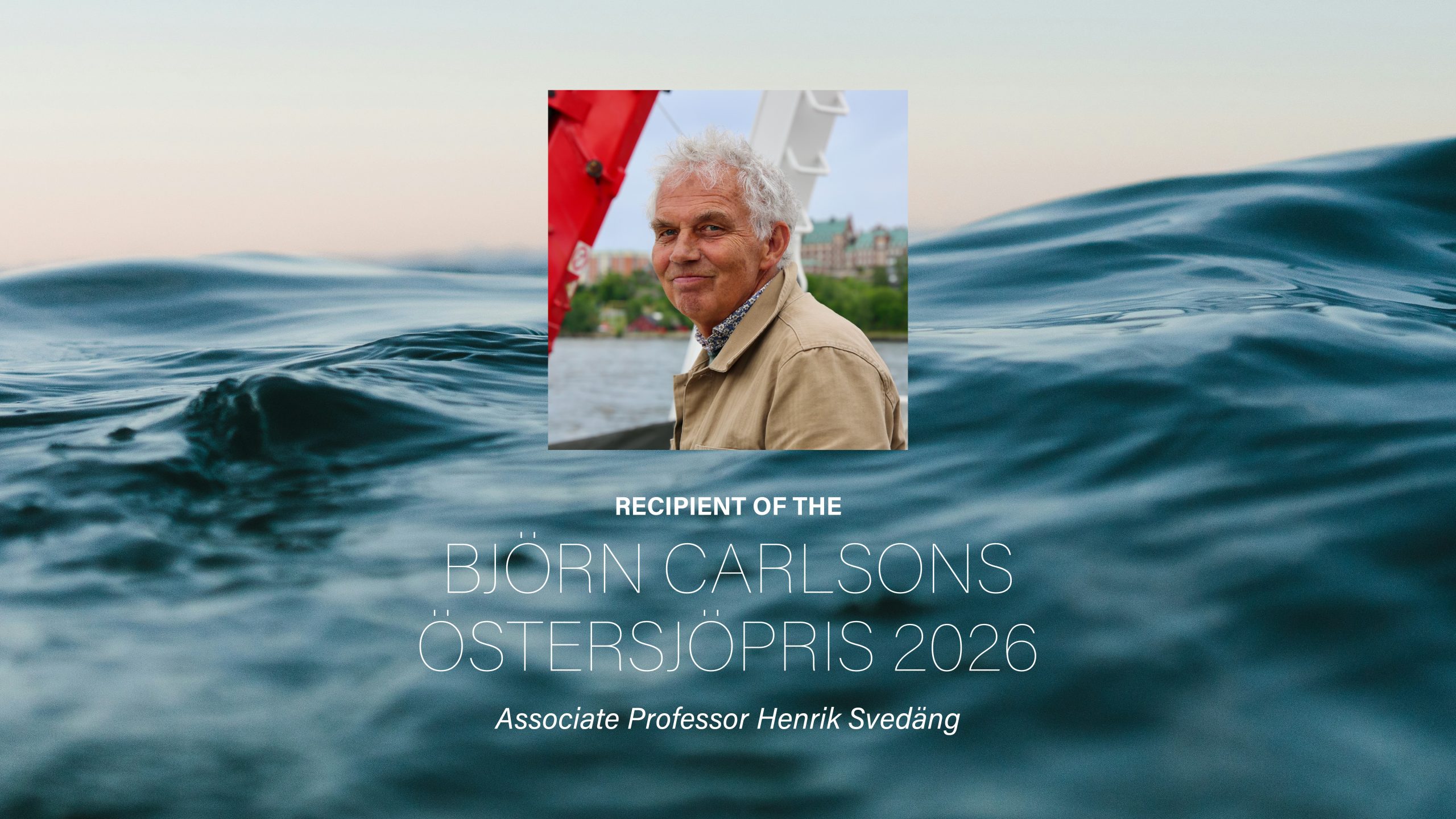
Introduction to the research area and summary of the nominee’s contributions:
The Baltic Sea is one of the world’s most heavily impacted marine ecosystems, facing multiple environmental pressures including overfishing, habitat degradation, eutrophication, and climate change. Understanding how fish populations respond to these pressures is essential for conserving biodiversity, maintaining ecosystem functions, and ensuring the sustainable use of marine resources. Species such as Atlantic cod, Baltic herring, sprat, and European eel are not only economically important but also play central ecological roles in the Baltic Sea food web. Research on fish population dynamics, stock structure, migration, connectivity, and fisheries management is therefore critical for the long-term health and resilience of the ecosystem.
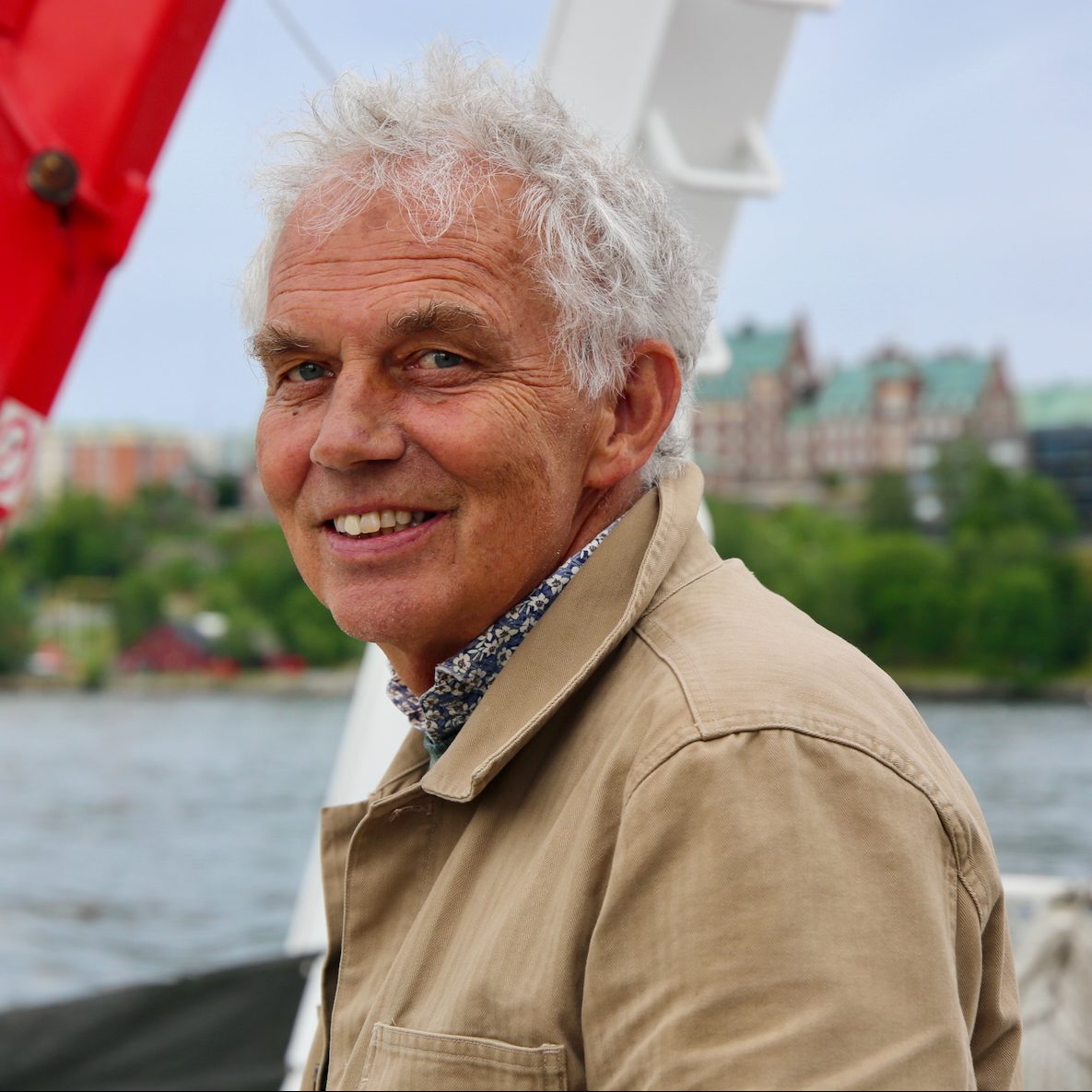
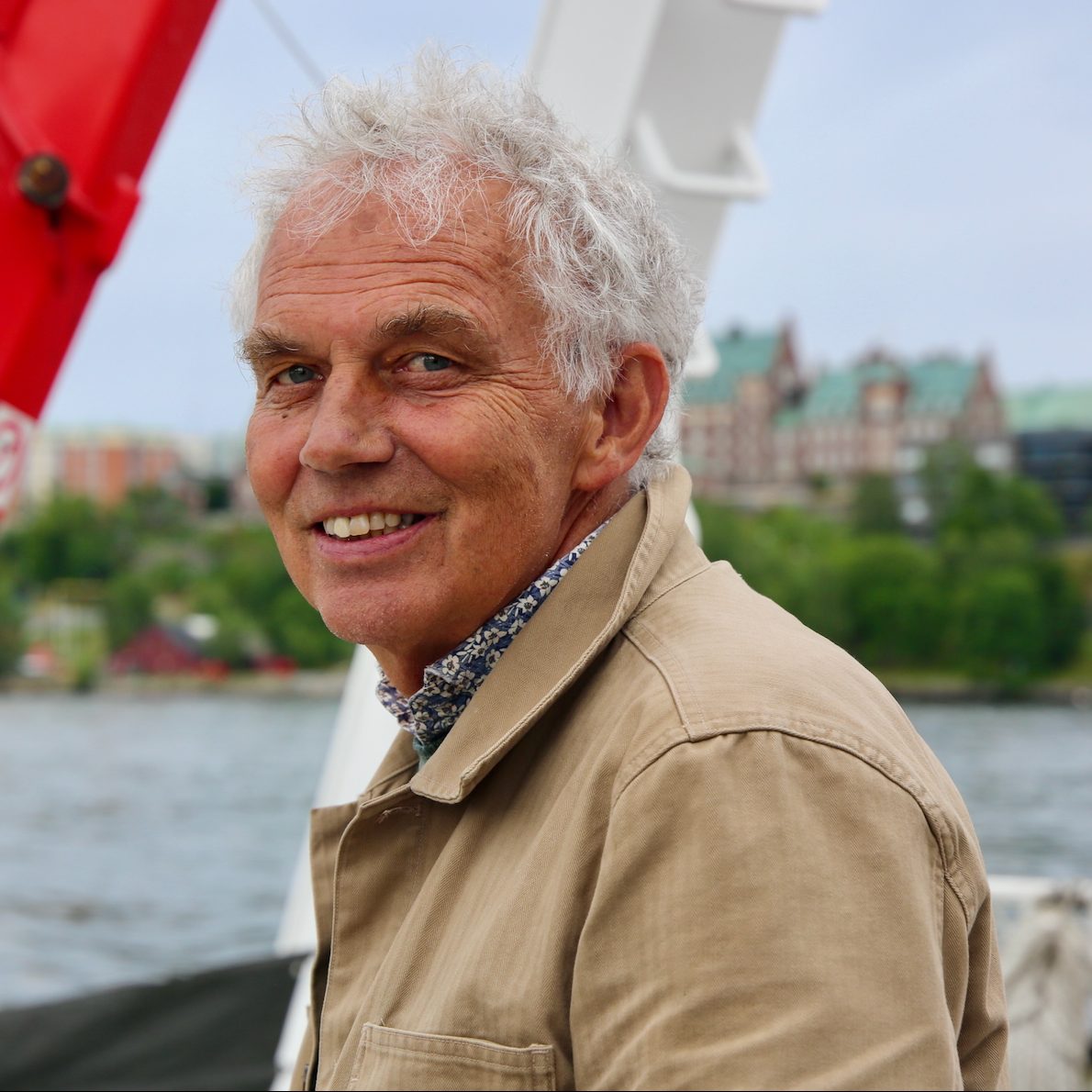
Henrik Svedäng has devoted his scientific career to advancing knowledge in this field. His research spans marine ecology, fisheries science, and ecosystem-based management. His work has significantly improved understanding of fish stock identification, population connectivity, migration behaviour, growth, maturation, density-dependent effects, and historical stock development. A defining feature of Svedäng’s research is his recognition of fish as integral components of marine ecosystems rather than merely exploitable resources. His studies have shown how the depletion of key species such as cod and herring can trigger ecosystem-wide consequences throughout the food web. This perspective has helped establish fisheries management as a central environmental issue, linking sustainable fisheries directly to biodiversity conservation and ecosystem health.
Beyond his scientific contributions, Svedäng has played a leading role in translating research into policy and public understanding. For decades, he has been one of the most prominent scientific voices advocating evidence-based fisheries management in Sweden and the European Union. He has consistently challenged management decisions lacking sufficient scientific support, even when this meant opposing political authorities, industry interests, or prevailing scientific opinion.
He has promoted interdisciplinary collaborations involving economists, sociologists, and legal scholars to develop and evaluate ecosystem-based fisheries management approaches. His work on reconstructing historical fisheries and stock abundance has also provided valuable long-term perspectives for understanding current ecological conditions and management challenges.
Research:
Henrik Svedäng has made outstanding contributions to the understanding of fish population dynamics, fisheries ecology, and ecosystem functioning in the Baltic Sea and adjacent waters. By combining field surveys, tagging studies, otolith chemistry, genetics, and historical analyses, he has generated knowledge that has become fundamental for sustainable fisheries management and biodiversity conservation.
One of Svedäng’s most influential scientific contributions is the 2007 paper “Migratory behaviour of Atlantic cod (Gadus morhua): natal homing is the prime stock-separating mechanism” (published in Marine Ecology Progress Series and highlighted as a Feature Article). With more than 214 citations, it remains one of his most recognized works. Using electronic tagging, Svedäng and colleagues tracked cod movements in the Skagerrak and Kattegat and showed that cod do not form a single, freely mixing population. Instead, distinct resident and migratory groups exist, with some fish returning to specific spawning grounds before migrating back to their home areas. The study provided strong evidence for natal homing, helping explain how distinct fish populations persist in open marine environments. It also demonstrated that collapsed local cod populations cannot simply be replaced by fish from elsewhere, since the behaviours that define a stock may take generations to recover. This work fundamentally advanced understanding of fish stock structure and remains highly influential in research on population connectivity and sustainable fisheries management.
Another of Svedäng’s widely cited studies is the 2014 paper “Selective fishing induces density-dependent growth”, published in Nature Communications. Using long-term data from the Eastern Baltic Sea, Svedäng and co-author Sara Hornborg showed that intensive harvesting of large cod can unintentionally reduce stock productivity. When large fish are consistently removed, populations become dominated by smaller individuals and overall growth rates decline. The study revealed a feedback loop in which size-selective fishing alters population structure, leading to poorer growth and fewer large fish over time. Its findings demonstrated that maximizing catch size or yield can be counterproductive and highlighted the importance of maintaining balanced population structures for sustainable fisheries. The paper has become an influential reference in fisheries management and ecosystem-based conservation.
A follow-up study in Ecology and Evolution extended these results by comparing Baltic cod populations over time (1991–2016). It showed that Eastern and Western Baltic cod have developed increasingly truncated size structures, while Öresund cod do not show the same trend. The authors conclude that selective fishing can destabilize population dynamics, especially in already low-productivity systems, and that sustainable exploitation of Eastern Baltic cod is likely lower than standard assessments suggest.
A recent study by Henrik Svedäng and Susanna Lidström (Aquaculture, Fish and Fisheries, 2026) reconstructs the history of fishing in the Stockholm Archipelago to understand how Baltic Sea fisheries functioned before industrialization. Using archival records, the authors show that 19th- and early 20th-century fisheries remained productive and resilient by operating flexibly, shifting effort toward abundant species and areas while reducing pressure on depleted stocks. The study contrasts this adaptive system with modern industrial fisheries, where technology, larger vessels, quota systems, and economic incentives allow high exploitation even as stocks decline. The authors argue that this shift has contributed to the collapse of regional herring stocks since the mid-20th century. By highlighting the roles of governance, market structures, and technology, the study demonstrates how historical perspectives can inform more sustainable fisheries management today.
Svedäng has published 79 peer-reviewed publications that received a total of 4269 citations (Google scholar 260615).
Impact:
Importantly, Henrik Svedäng’s research has had a substantial impact beyond academia, providing an essential scientific foundation for fisheries management and conservation in one of Europe’s most environmentally challenged marine ecosystems. A key example is the paper “Mismanagement of fisheries: Policy or science?” (Fisheries Research, 2008), co-authored with Massimiliano Cardinale, which critically examines why many Northeast Atlantic fish stocks became severely overexploited. The study challenges the assumption that stock collapses are primarily the result of insufficient scientific knowledge or weak models, instead showing that existing scientific advice has often been adequate to sustain healthy fish populations if it had been consistently applied. The authors argue that the central problem lies in governance and decision-making, where short-term economic and political considerations have frequently overridden long-term sustainability, leading to continued overfishing despite clear scientific warnings. This work helped shift the debate from a focus on scientific uncertainty to the implementation gap between science and policy.
Building on this perspective, Svedäng has also been an active contributor to contemporary policy discussions on Baltic Sea fisheries, including debates on measures to protect declining herring stocks. In relation to the extension of Sweden’s offshore trawling limit, he has emphasized that spatial restrictions alone are unlikely to deliver rapid stock recovery without parallel reductions in overall fishing pressure. While recognizing that such measures can provide localized ecological benefits, he has cautioned that they risk becoming largely symbolic if not combined with lower catch quotas and stricter control of fishing capacity. His position consistently highlights the need for comprehensive, precautionary management rather than isolated interventions.
Svedäng has been exceptionally active in communicating scientific knowledge to policymakers, government bodies, and the general public throughout his career. He has served in expert roles such as contributing to the Swedish Board of Fisheries reference group for the SIDA-initiated exhibition “The Blue Planet” (1998) and as a keynote speaker for the Swedish Ministry of the Environment in a seminar on fisheries impacts on biodiversity (2000). More recently, he has been regularly invited to high-level policy dialogues, including panel discussions on the state of Baltic Sea cod organized by the Fisheries Secretariat alongside representatives from the European Commission and Nordic environmental organisations, as well as roundtable discussions on Swedish eel management and eel restocking hosted by Naturskyddsföreningen and FishSec in 2022. As Sweden’s delegate to multiple ICES working groups, Svedäng has helped develop stock assessments and ecosystem indicators critical to fisheries advice at EU and regional levels. His involvement in Nordic-level dialogues, including the Baltic Sea Region Flagship Salmon Project and IPBES-like biodiversity assessments, highlights his dedication to ecosystem-based management. He has also served as an invited expert speaker at a European Parliament Fisheries Committee hearing on the implementation of the Baltic Sea management plan, where he presented data on changes in fish stock productivity and their drivers. In addition to these formal policy engagements, he maintains a strong presence in media and public debate, contributing to sustained knowledge transfer between science, management, and society.
In summary, Henrik Svedäng’s impact extends far beyond academia. Through a lifetime of pioneering research, public engagement, and policy influence, he has transformed understanding of Baltic Sea ecosystems while raising awareness among policymakers, NGOs, media, and the public of the urgent challenges facing fish populations and marine biodiversity. His scientific integrity, independence, and commitment to evidence-based management have made him one of the Baltic region’s most influential voices for sustainable fisheries and ecosystem protection.
He has contributed to 69 policy-related documents, from 17 sources, across nine countries (Source: Overton).
Contact details:
Associate Professor Henrik Svedäng
Associate Professor (Docent) in marine ecology,
Swedish Institute for the Marine Environment, University of Gothenburg
and The Baltic Sea Centre, Stockholm University
📞 Phone: +46 (0)76-18 55 88
✉️ Email: henrik.svedang@su.se